

I am pleased to announce the launch of a further recorded Zoom lecture on Bassbars, which is now live on my Teachable website.
I am pleased to announce the launch of a further recorded Zoom lecture on Bassbars, which is now live on my Teachable website.

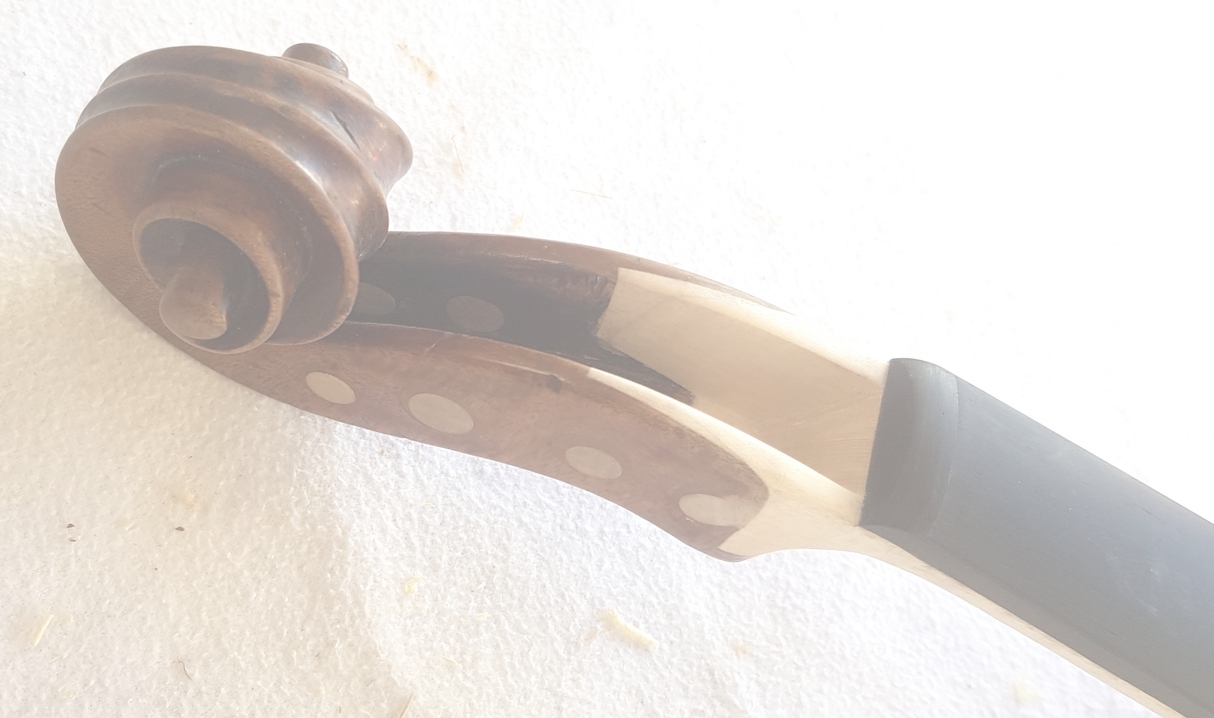
Originally necks were varnished like the rest of the instrument, so when neck staining, I try and replicate some of the varnish colour into the neck. I’m really not keen on seeing necks that are drastically lighter in colour than the rest of the instrument.
When you find treasure below the over-varnish.


I am excited to let you know that you can now gain access to further teaching resources on my Teachable website.
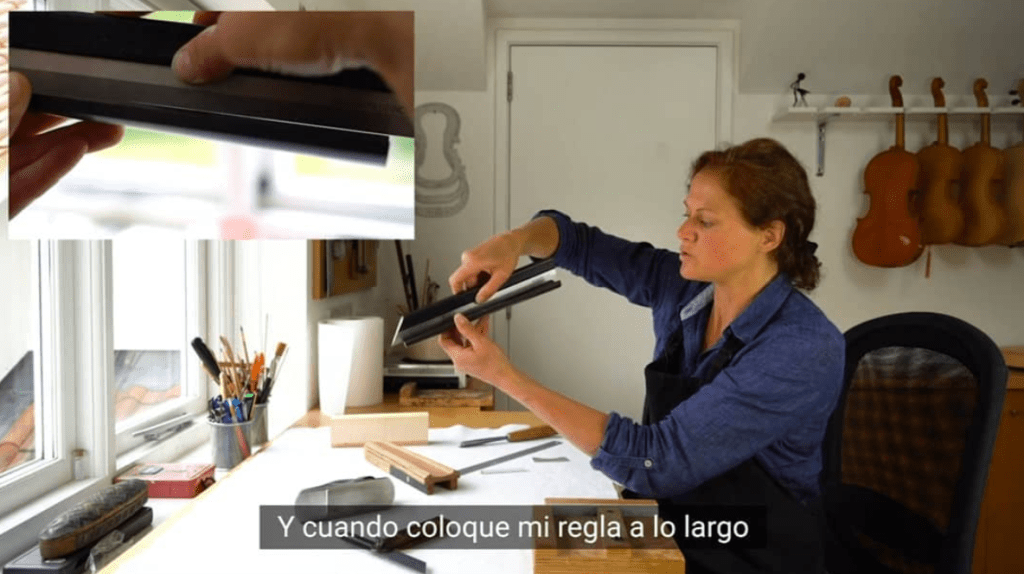
I want to give a huge shout-out to Pablo Alfaro @alfaro_violins for having completed the editing of the Spanish subtitles of Part 1 of my online course. It takes hours and hours to correct the initial subtitles and I get the impression he is being particularly meticulous about it!

Through-patches are needed sometimes and rather than trying to fit a patch to perfectly match the outside, I tend to use shavings first and then fit a patch from behind, all supported by a plaster cast.

I don’t spend a huge amount of time on retouching peg bushings, as you expect to see them on old instruments and I always use maple end grain bushings.

The RAB Trust has been organising some Zoom lectures for Violinmaking students in the UK with restorers and makers. Crack repair, retouching and fitting a bassbar in an old instrument have been my subjects. The first Zoom with PowerPoint on cracks was a 2 hour session. A lot of preparation work but great fun!
Continue reading “Virtual Lectures in association with the RAB Trust”

A severely over-varnished front with good original varnish underneath. I remember working mainly under the UV light to carefully remove the over-varnish, preserving the original varnish below.

I was very sceptical whether I would be able to improve this area above the bridge feet. It had been over-pressed when a breast patch was fitted which resulted in “reverse grain”: the grain lines appear lighter and sit higher than the soft grain which has been indented in between the grain lines and filled with black gunk.
 Iris Carr Restorations