

I don’t spend a huge amount of time on retouching peg bushings, as you expect to see them on old instruments and I always use maple end grain bushings.
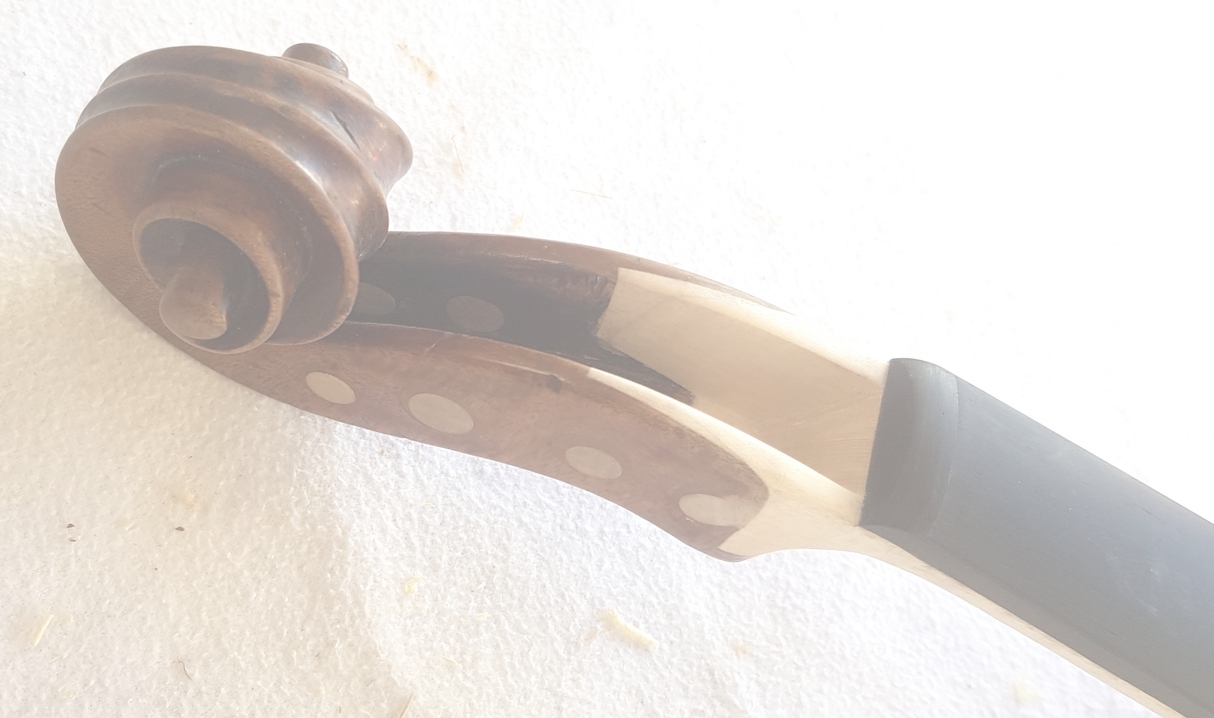
I don’t spend a huge amount of time on retouching peg bushings, as you expect to see them on old instruments and I always use maple end grain bushings.

The RAB Trust has been organising some Zoom lectures for Violinmaking students in the UK with restorers and makers. Crack repair, retouching and fitting a bassbar in an old instrument have been my subjects. The first Zoom with PowerPoint on cracks was a 2 hour session. A lot of preparation work but great fun!
Continue reading “Virtual Lectures in association with the RAB Trust”

A severely over-varnished front with good original varnish underneath. I remember working mainly under the UV light to carefully remove the over-varnish, preserving the original varnish below.

I was very sceptical whether I would be able to improve this area above the bridge feet. It had been over-pressed when a breast patch was fitted which resulted in “reverse grain”: the grain lines appear lighter and sit higher than the soft grain which has been indented in between the grain lines and filled with black gunk.

My new online course will have Spanish subtitles added this month!

Examples of creating texture with filler varnish (I use Deft) through scraping along grain lines and replicating craqueleur.

The hardest thing about gluing shavings on the top is getting the reflection right.

Inlaid violin baroque fingerboard to go with an original tailpiece. I rarely do inlays, so really enjoyed this one. Tested the colouring underneath first.


 Iris Carr Restorations