

Thank you to @roziedeloach and @jhlviolins for giving me the opportunity to share my personal story in this podcast.
Thank you to @roziedeloach and @jhlviolins for giving me the opportunity to share my personal story in this podcast.

I recently had to replace a French style cello bridge I’d cut a few years ago as the string heights had got too low and we opted to try a hybrid this time, a personalised model designed by the guys at Beare’s a few years ago. It’s more Belgium style but with extra wood above and below the heart. This is what my customer Christopher Slatter thought of the different bridges:

An unusual restoration from a few years ago – don’t ask me why they did this!
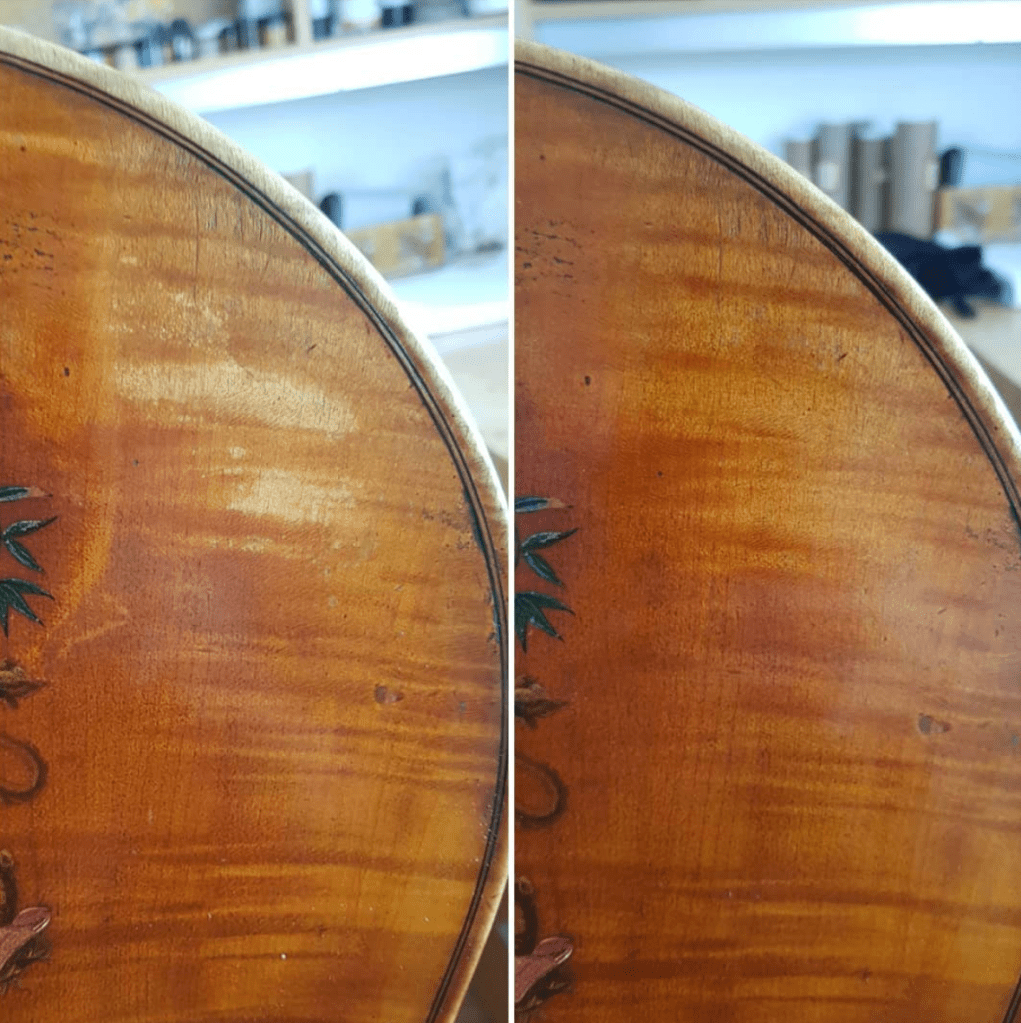
A bit of understated blending in after a protective see-through plastic was removed from the painted area and covering the worn area to the right.

I am pleased to announce the launch of a further recorded Zoom lecture on Bassbars, which is now live on my Teachable website.

Originally necks were varnished like the rest of the instrument, so when neck staining, I try and replicate some of the varnish colour into the neck. I’m really not keen on seeing necks that are drastically lighter in colour than the rest of the instrument.
When you find treasure below the over-varnish.


I am excited to let you know that you can now gain access to further teaching resources on my Teachable website.
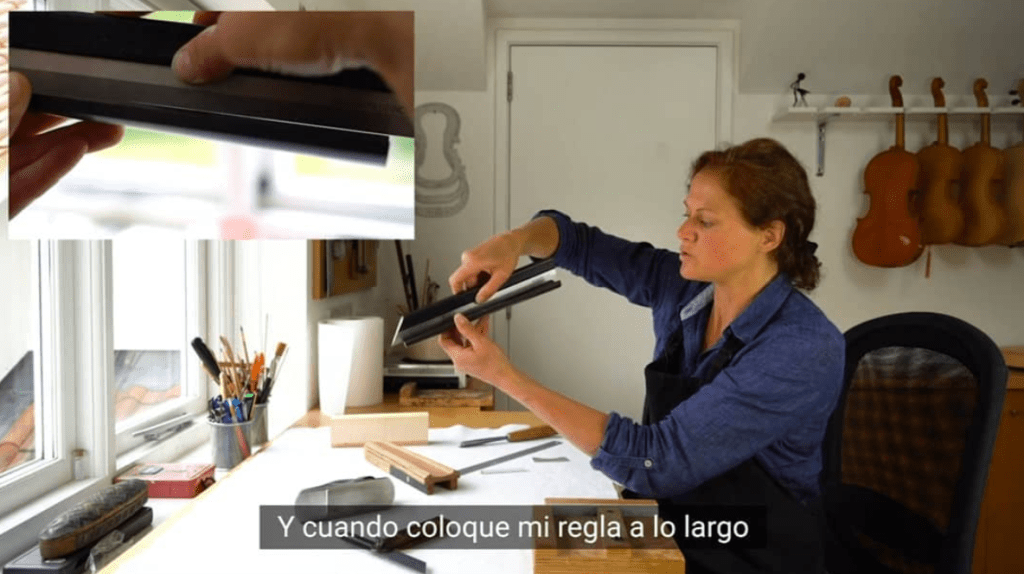
I want to give a huge shout-out to Pablo Alfaro @alfaro_violins for having completed the editing of the Spanish subtitles of Part 1 of my online course. It takes hours and hours to correct the initial subtitles and I get the impression he is being particularly meticulous about it!

Through-patches are needed sometimes and rather than trying to fit a patch to perfectly match the outside, I tend to use shavings first and then fit a patch from behind, all supported by a plaster cast.
 Iris Carr Restorations